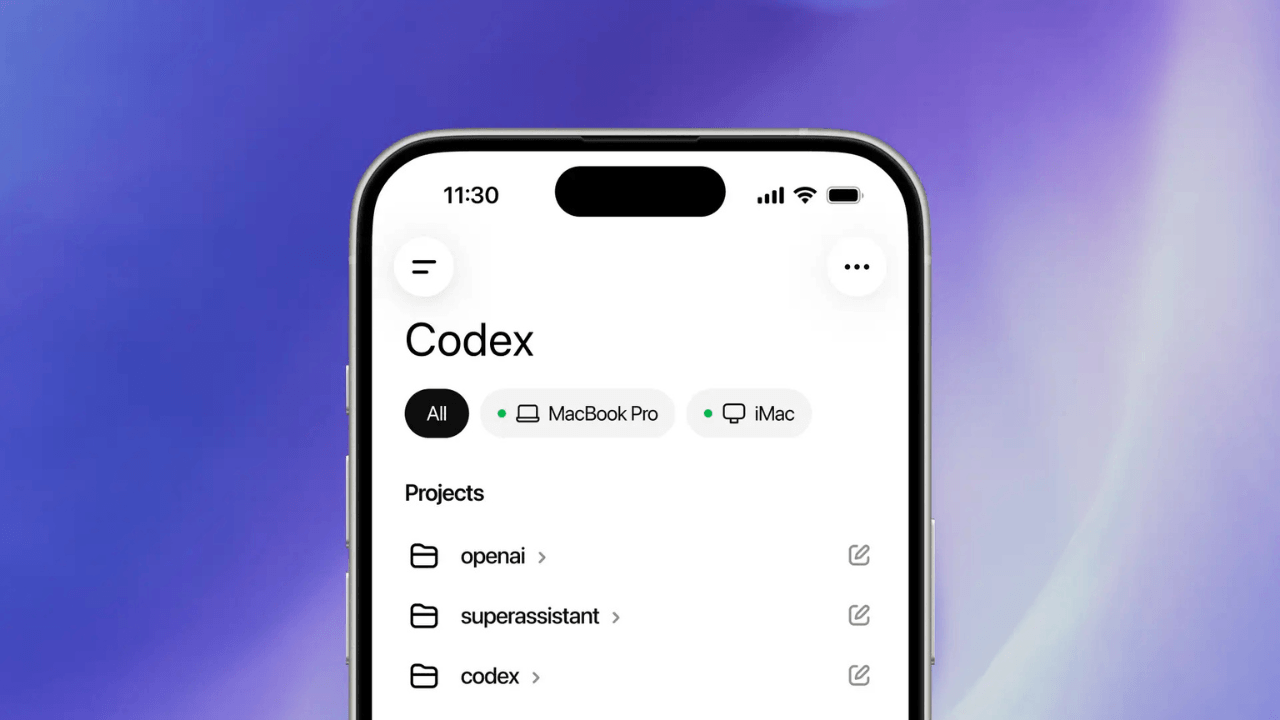
OpenAI aims to significantly accelerate software development processes by making the programming assistant Codex accessible on mobile platforms. Users can now carry this powerful tool with them through iOS and Android applications.
The mobile app provides an interface designed to offer the support and guidance developers need during coding projects. According to OpenAI, Codex uses a secure transmission layer for mobile use, facilitating information exchange between devices. This ensures that users' session states and contexts remain continuously synchronized.
More Effective Coding with New Features
The large language model GPT-5.5, which forms the basis of Codex, can handle long programming tasks. However, it is noted that users sometimes need guidance during this process. For instance, when it proposes two different solutions, it may ask the user which path to prefer.
With mobile support, users can now continue their tasks even when away from their computers. This prevents unnecessary delays and ensures project continuity. Additionally, if Codex starts to operate incorrectly, developers can immediately rectify the situation.
OpenAI is also enhancing Codex's functionality by adding features like Hooks and Remote SSH with the new update. With Hooks, users can make the programming assistant more customizable. Furthermore, the Remote SSH feature allows connections to remote development environments over encrypted links.
As part of the new update, users can also generate the necessary access credentials to work seamlessly with third-party developer tools. OpenAI's independent clients and support for HIPAA compliance offer innovative solutions for developers.
In summary, the integration of Codex with mobile devices not only provides significant convenience in software development processes but also allows for more efficient project management. Users will only need to update their ChatGPT applications to benefit from these new features.